Window Treatments & Motorization
Solar Shades and Openness Factor: Keep the View, Lose the Glare
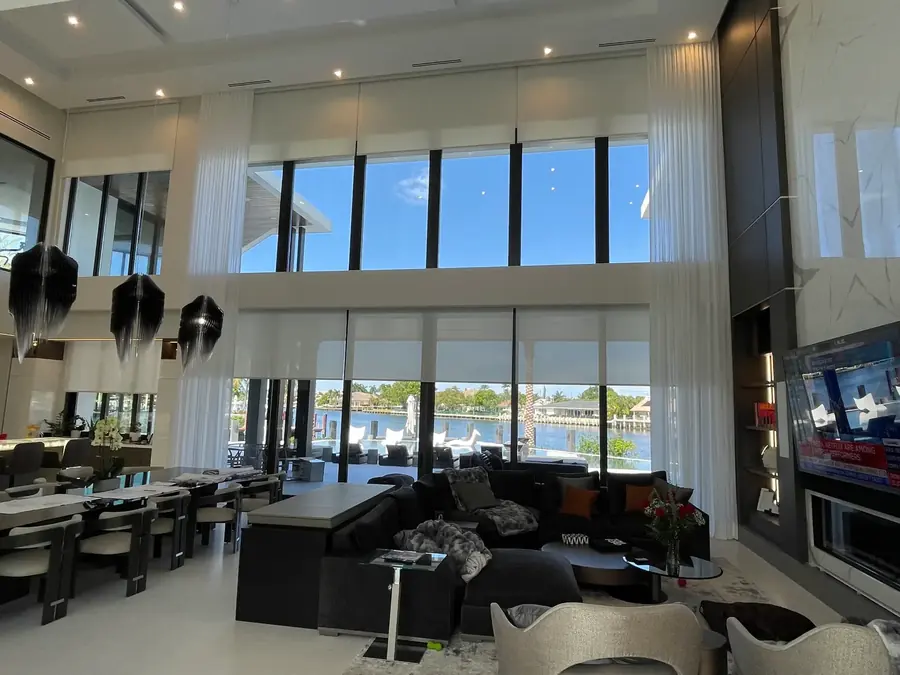
Solar screen shades are the product waterfront homeowners ask for first, and the easiest one to get wrong. Two numbers decide whether you keep the view: openness and color.
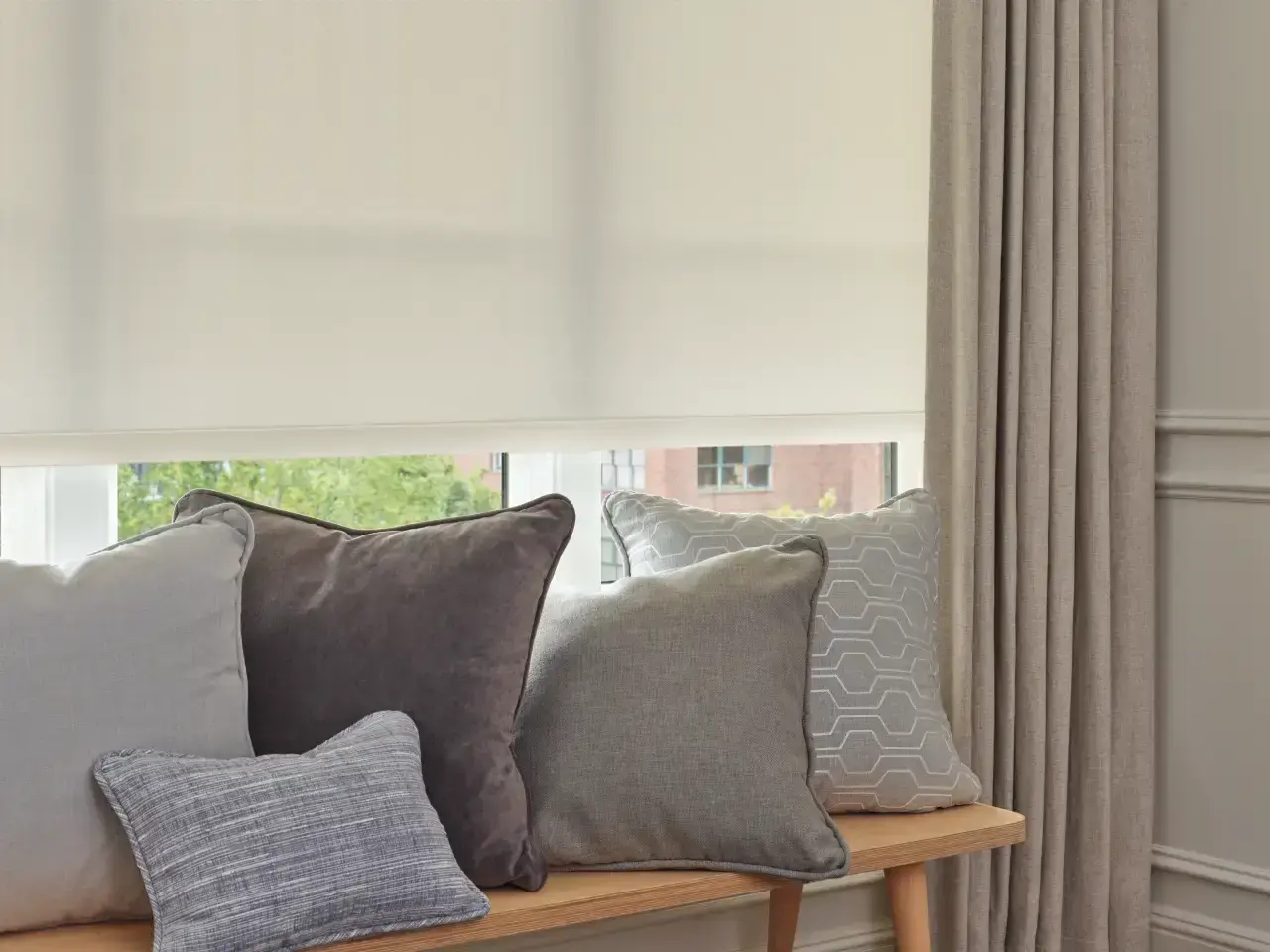
If your home faces the ocean, the Intracoastal, a golf course or a pool, you bought it for the view. Then the first July afternoon arrives, the glare off the water makes the TV unwatchable and the sofa starts to fade. Solar screen shades fix the problem without hiding what you paid for, but only when two specifications are chosen with care: openness factor and fabric color.
We help clients across Broward and Palm Beach choose screen fabrics every week. Here is how we think about it.
What openness factor means
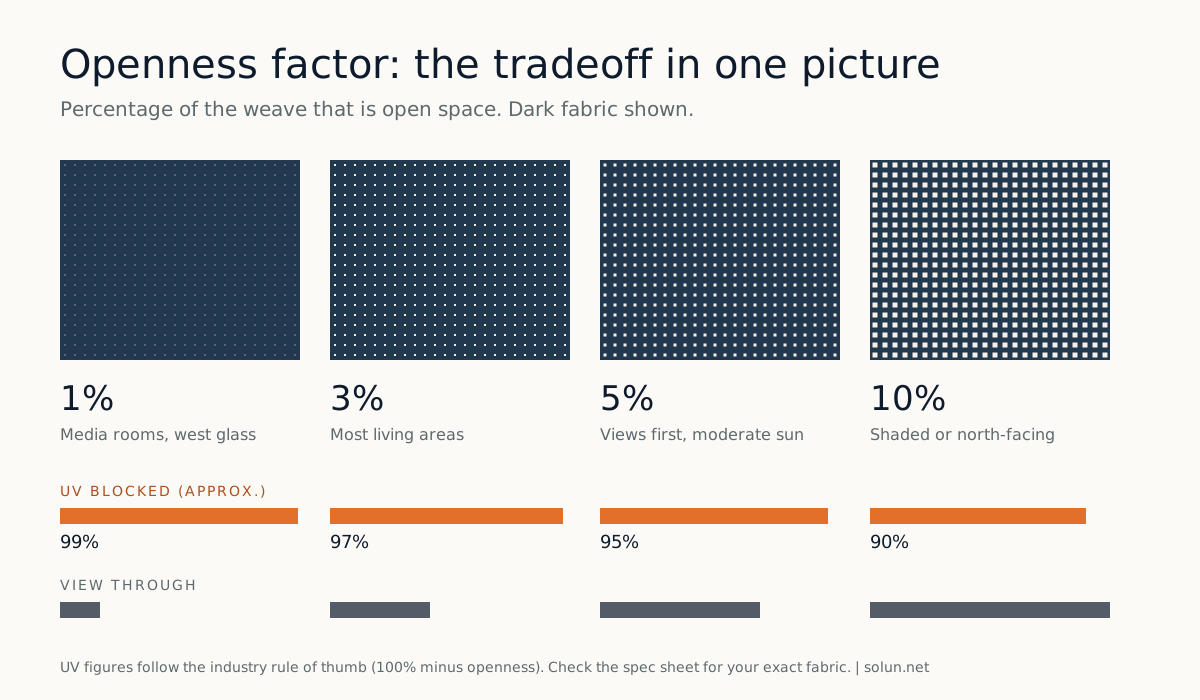
Every solar screen fabric is woven with a measured amount of open space between the yarns. That percentage is the openness factor. A 1 percent fabric is a tight weave that lets very little direct sun through. A 10 percent fabric is visibly more open. The open space is what lets you see out, and it's also how sun, heat and UV get in.
A widely used rule of thumb is that a screen blocks roughly 100 minus its openness in UV. A 3 percent fabric blocks about 97 percent of UV, and a 10 percent fabric about 90 percent. Manufacturers publish exact figures for each fabric, and we check them for the specific product before you order.
Which openness for which room
1 percent
The strongest glare and heat control. We specify it for media rooms, home offices with monitors facing windows, and west-facing glass that takes full afternoon sun. You still see shapes and light outside, but the view is softer.
3 percent
The best balance for most living rooms, kitchens and great rooms in South Florida. It handles bright, reflected light off water while keeping a clear view of the horizon. If we had to pick one fabric for a whole waterfront condo, it would be 3 percent.
5 percent
A good choice where the view matters more than maximum glare control, or on east and south windows shaded by an overhang or trees.
10 percent
Best for north-facing rooms, shaded lanais and spaces where you want airflow and the lightest possible look. It does less against direct afternoon sun.
Color matters as much as openness
Here is the part most people don't expect: a dark fabric gives you a clearer view than a light fabric at the same openness. Dark yarns absorb light, so your eye looks past them to the scene outside. Light yarns catch the sun and glow, which washes out the view and can create its own glare.
Light fabrics do reflect more solar heat back out the window, and they look brighter and airier from inside. So the choice depends on priorities:
- Charcoal, black, bronze: best view-through and glare control. Our default for oceanfront condos and media rooms.
- Gray and taupe: a middle ground that blends with most interiors.
- White and linen: more heat reflection and a softer, brighter room, with a hazier view.
Some fabrics are made with a dark interior face and a light exterior face, which gives you the view of a dark fabric with more of the heat reflection of a light one. Ask about them for west-facing glass.
Test the fabric at your window
Screen fabric looks completely different in a showroom than at your window at 4 PM. We bring samples to your home and hold them up at the time of day the glare is worst.
Book a consultationThe privacy catch
Solar screens give good privacy in daytime, when it's brighter outside than inside. After dark, with lights on inside, the effect reverses and people outside can see in. Bedrooms, bathrooms and street-facing rooms need a second layer for evenings. Good options include:
- A dual roller with a screen fabric and a blackout or room-darkening fabric on one bracket
- Screen shades behind motorized drapery or sheers
- A screen shade scheduled to swap for a privacy layer at sunset
Motorization makes the layered approach easy to live with. A sunset scene can raise the screens so you enjoy the sky, then close the privacy layer twenty minutes later without anyone touching a button. See how we set that up on our motorized window treatments page.
A note for South Florida sun
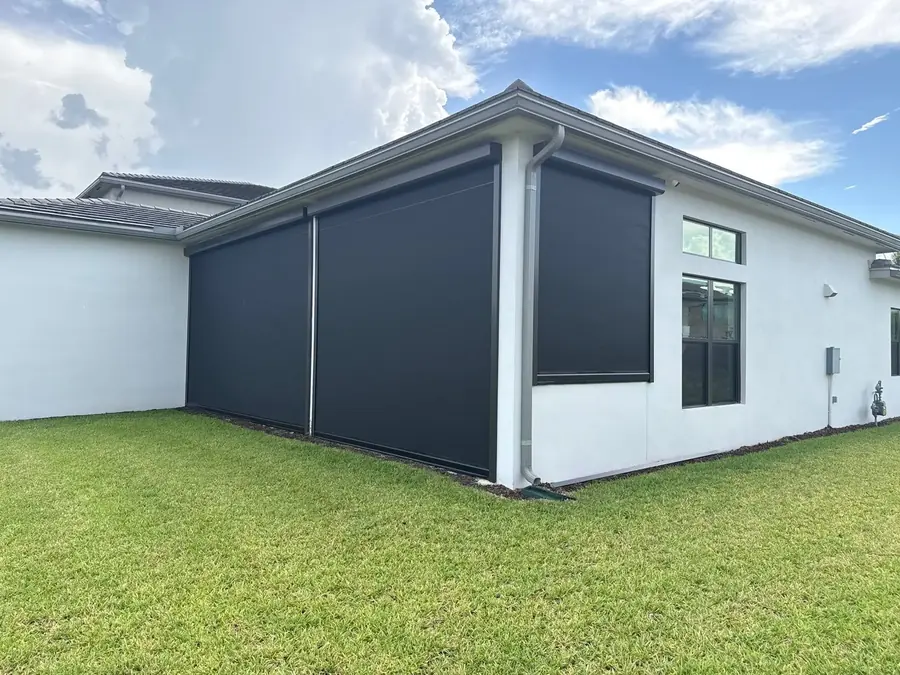
West and south exposures are the hardest windows in a Florida home, and water and white pavers reflect even more light into a room. If a room faces west over water, we start the conversation at 1 or 3 percent in a dark color. For outdoor applications on a lanai or pool house, the same openness and color logic applies to exterior screens, covered in our outdoor shades planning guide.
Choose with someone who installs them
The difference between a screen shade you love and one you leave raised all year comes down to the right fabric for that particular window. Book a free consultation and we'll recommend openness and color window by window, with samples in your own light.