Expand Your Living Space Outdoors: Planning Motorized Patio Shades in South Florida
Heat, glare and no-see-ums keep most Florida patios empty until dark. Here is how to plan outdoor shades that turn the space into a room you use every day.
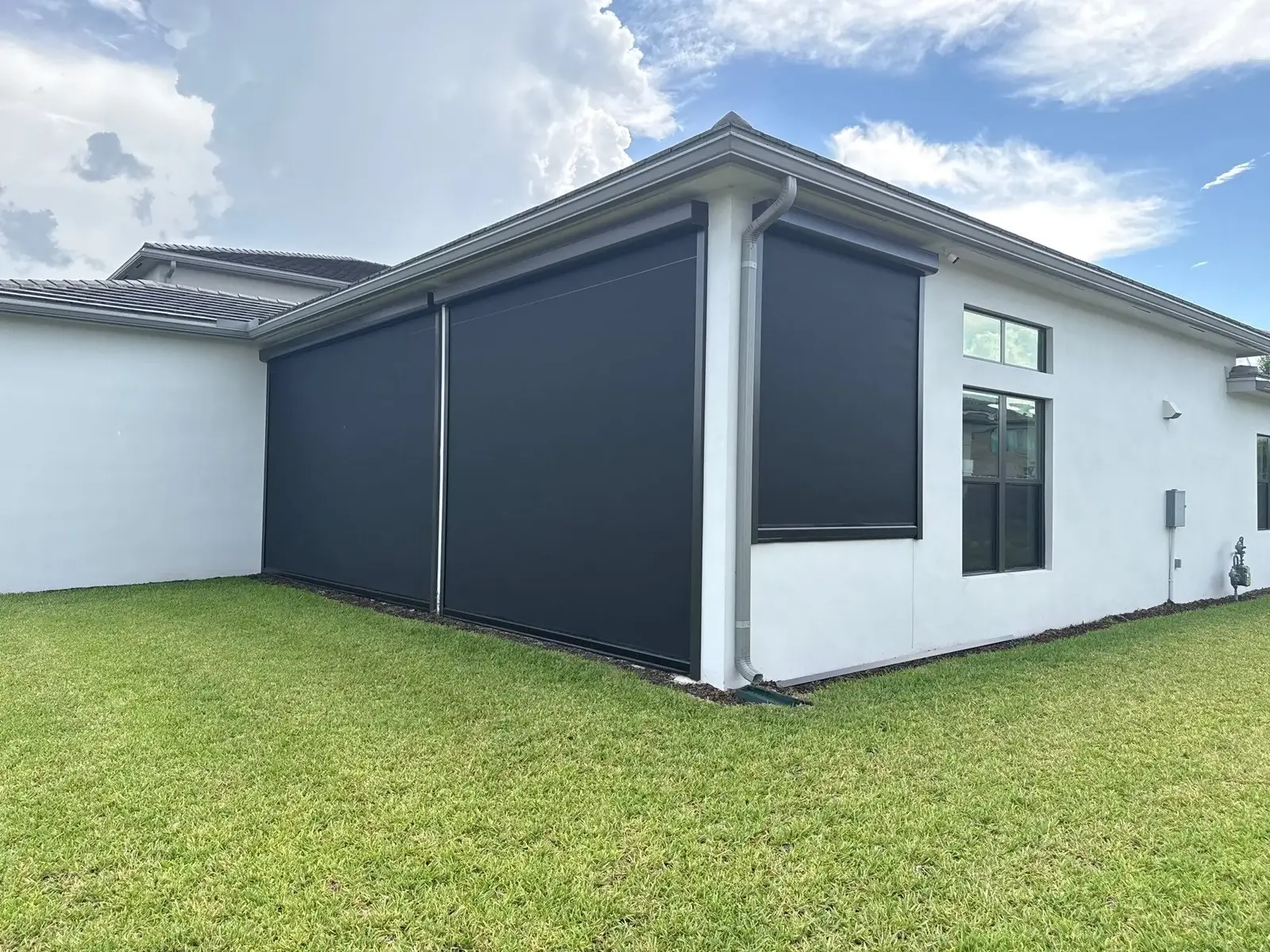
South Florida is built for outdoor living, yet the covered patio is the most underused room in most of the homes we visit. The furniture is good and the view of the pool or the canal is the reason the owners bought the house. And from about 2 PM until dusk, nobody sits out there.
Three problems cause it: low afternoon sun that slides in under the roof, glare off the water and pavers, and insects that show up as soon as the heat breaks. Motorized outdoor shades solve all three, and they do it without enclosing the space for good. This guide covers what we look at when we plan an outdoor shade project, from Wellington to Fort Lauderdale.
Why your roof stops working at 4 PM
A covered lanai is shaded when the sun is high. As the afternoon goes on, the sun drops toward the western horizon and its light comes in nearly flat, under the edge of the roof and straight onto the seating and the sliding doors behind it. On a west-facing patio that happens every afternoon of the year, and in summer the low sun is also the hottest part of the day.
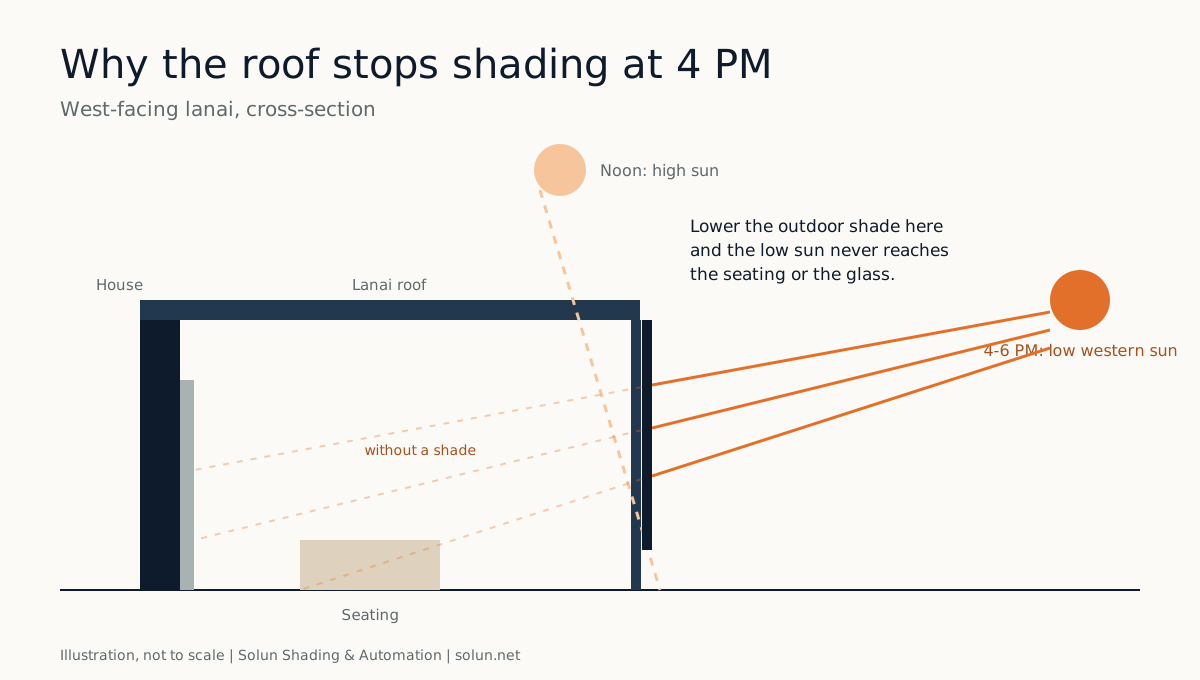
A vertical shade mounted at the outer beam intercepts that low sun before it reaches anything. It also stops the heat before it hits your glass, which interior shades can't do. By the time sunlight reaches an indoor shade, it has already passed through the window and warmed the room.
Choose the right type of outdoor shade
Motorized exterior screens
Vertical screens that drop from the beam or header of a covered patio. They're the workhorse for lanais, screened porches and pool houses. Look for systems where the fabric runs in side tracks. The track holds the fabric edges, so the shade stays flat in a breeze and closes off the opening to mosquitoes and no-see-ums. Systems that hang free or use cables at the sides cost less but don't seal against insects.
Retractable awnings
For an open terrace or a pool deck without a roof, a retractable awning projects shade outward and rolls back when you want full sun. We install SunPro awnings, motorized so they get used and can retract quickly when the weather turns.
Recessed systems for new construction
If the ceiling or beam isn't finished yet, the shade housing can be recessed so it disappears completely when the shade is up. This is the cleanest result, and it only costs the coordination of bringing us in before the ceiling is closed.
Pick fabric for the view you want to keep
Exterior screen fabrics are woven with a set percentage of open space, called the openness factor. Lower openness blocks more sun and gives more daytime privacy; higher openness lets more breeze and view through. For outdoor shades in South Florida we steer most clients toward a fabric in the 3 to 5 percent range, then fine-tune for privacy.
Color matters as much as openness. Dark fabrics absorb glare, so your eye sees through them more easily, and the view of the pool or the water stays crisp. Light fabrics reflect more heat but glow in bright sun, which softens the view behind them. Our article on solar shade openness factor explains the tradeoff with a side-by-side comparison.
Look through the fabric from your own chair
We bring exterior fabric samples to the consultation and hold them up on your lanai at the time of day you use it most.
Book an outdoor shade consultationPlan for wind and storm season
This is the part we're most direct about: outdoor shades are not hurricane shutters, and they aren't designed to stay down in a tropical storm. When high winds are forecast, raise them. That's one of the strongest arguments for motorization outdoors. A shade that goes up with one button actually gets raised, and a wind sensor can retract motorized shades and awnings automatically when gusts pick up, even if nobody is home.
Side-track screens handle everyday breezes much better than free-hanging shades. They are still a sun and insect product, though, and your storm plan for the openings should be separate.
Power, mounting and approvals
Most exterior motors are hardwired, so you need power at or near each mounting point. On an existing home we map the locations and work with your electrician; on new construction we give the builder the locations during rough-in. We also check what the shade will mount to. Concrete block, stucco over block, wood beams and aluminum screen enclosures all need different anchors and sometimes a structural header.
If you live in an HOA community or a condo, expect to submit an application before anything goes on the outside of the building. We provide product specifications, fabric color samples and mounting details for that submission, and it's worth starting early because review boards meet on their own schedules.
Control: tie it into the rest of the house
Outdoor shades become far more useful when they're part of the same system as your interior shades and lighting. A late-afternoon scene can lower the west patio screens, drop the interior solar shades on the same side and bring up the landscape lights at dusk. Exterior motors from Somfy are common here, and they work alongside the interior motorized shades we install.
What a finished project changes
Once the shades are in, the patio stops being something you look at through the glass and becomes a room again: dinner outside in August, a laptop on the lanai in the afternoon, kids in the pool at 5 PM while the adults sit in the shade without squinting. That's the real return on the project. You already paid for that space when you bought the house, and now you get to use it for most of the day.
See more on our outdoor shades page, or book a consultation and we'll look at your patio at the hour it gives you trouble.